If you are planning a new crushing setup or upgrading your current plant, one of the biggest decisions you will make is choosing between a jaw crusher and an impact crusher. Both machines are widely used in aggregate, mining, and recycling operations. Both reduce large material into smaller sizes. But they work differently and are built for different goals.
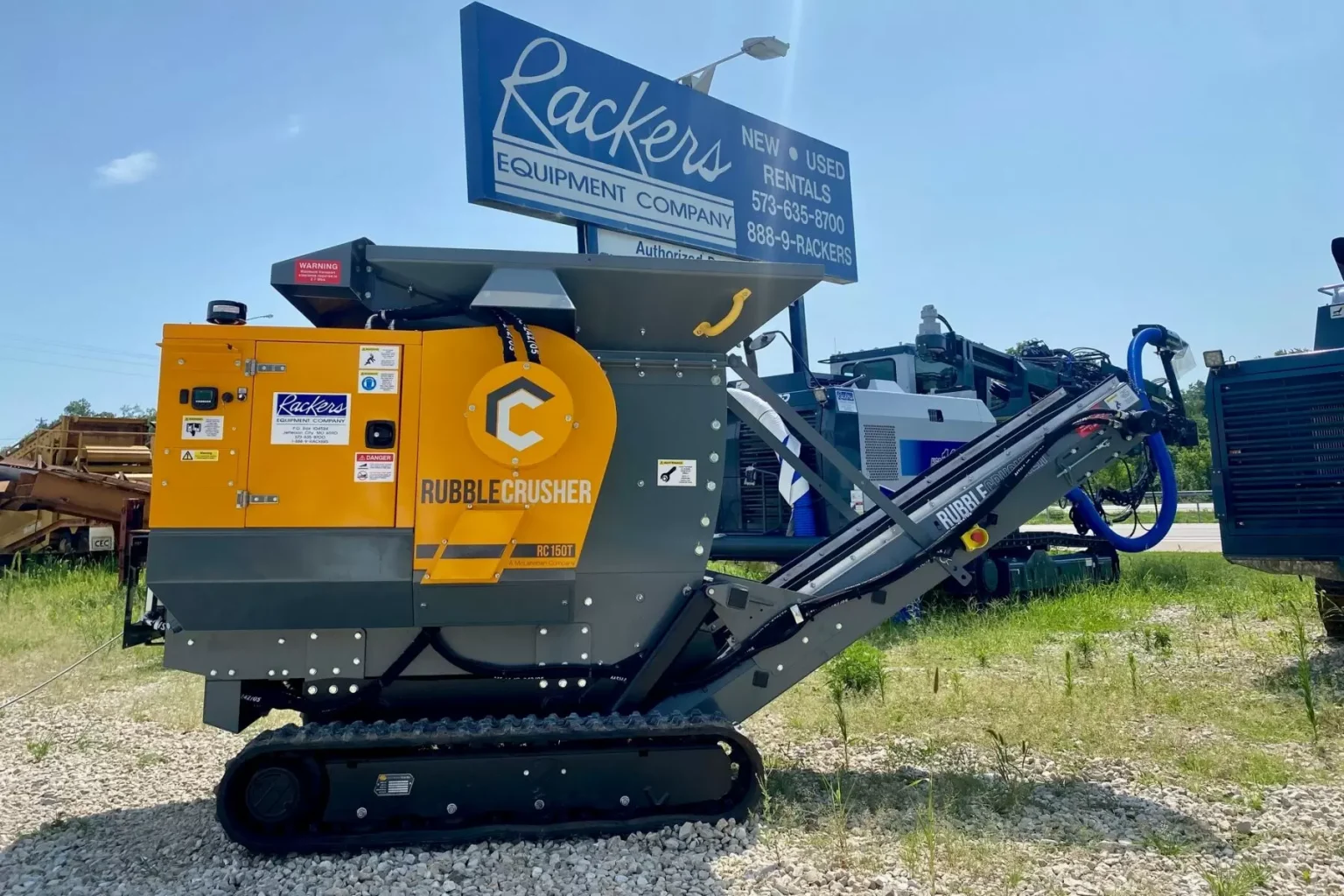
At Rackers Equipment Company, we have helped quarry and mining operations throughout Missouri for more than three generations. When customers ask which crusher is better, our answer is always the same. It depends on your material, your production targets, and how the crusher fits into your overall process.
Let’s take a closer look at what sets these machines apart.
How a Jaw Crusher Breaks Material
A jaw crusher uses compression to break rock. It has two heavy plates called jaws. One stays fixed in place while the other moves back and forth. As material enters the chamber, the moving jaw pushes it against the stationary jaw, crushing it down into smaller pieces.
Jaw crushers are most used in the primary stage of crushing. They are designed to take large chunks of blasted rock and reduce them to a manageable size for further processing.
Where Jaw Crushers Perform Best
Jaw crushers are ideal for:
- Large feed material straight from the blast
- Hard and abrasive stone such as granite and dense limestone
- Operations that need a reliable primary crusher
In many Missouri limestone quarries, a jaw crusher is the first machine in the line. It sets the pace for the rest of the plant.
Strengths of a Jaw Crusher
Jaw crushers are known for durability and simplicity. They have fewer wear parts than impact crushers, and their heavy-duty design makes them dependable in tough conditions. They also tend to have lower wear costs when processing highly abrasive rock.
However, the finished product from a jaw crusher is not always uniform in shape. Many operations use a secondary crusher after the jaw for this reason.
How an Impact Crusher Works
An impact crusher uses speed and force instead of compression. Inside the machine, a rotor spins at high speed. Attached to that rotor are blow bars. When material enters the chamber, it strikes the blow bars and is thrown against impact plates, breaking apart on contact.
This process creates a more uniform and cubical finished product compared to a jaw crusher.
Where Impact Crushers Shine
Impact crushers are often used for:
- Secondary or tertiary crushing
- Producing high-quality aggregate with consistent shape
- Recycling concrete and asphalt
- Applications where a high reduction ratio is needed
Contractors who crush recycled concrete on job sites often prefer impact crushers because they can produce finished material in fewer stages.
Strengths of an Impact Crusher
Impact crushers are excellent at shaping material. If your end product must meet strict specifications for asphalt or concrete mixes, an impact crusher may be the better option.
They can also achieve significant size reduction in a single pass. That can simplify plant design and reduce the need for multiple crushing stages.
On the other hand, impact crushers can experience higher wear costs when processing hard and abrasive rock. Blow bars and impact plates require regular inspection and replacement, especially in heavy-duty quarry applications.
Material Type Makes a Big Difference
Choosing between a jaw and an impact crusher often starts with understanding your material.
If you are crushing very hard or abrasive stone, a jaw crusher typically handles that workload more efficiently in the primary stage. The compressive action tends to create less wear compared to high-speed impact.
If you are working with softer limestone, recycled concrete, or asphalt, an impact crusher may offer better results and produce a cleaner, more uniform product.
The wrong choice can lead to unnecessary downtime and higher operating costs. That is why it is important to evaluate your specific material before deciding.
Plant Design and Production Goals
Another factor to consider is how the crusher fits into your overall system.
A jaw crusher is usually the starting point in a multi-stage plant. It handles the large feed material and passes it along to secondary crushers and screens.
An impact crusher is often used after a jaw crusher or as a standalone machine in recycling operations. In some setups, especially mobile plants, an impact crusher can handle both reduction and shaping in one unit.
Your production volume also matters. Higher output operations may require a combination of crushers to maintain efficiency and meet demand.
Operating Costs and Maintenance
Jaw crushers are known for their straightforward design. Maintenance is typically simpler, and wear parts often last longer when crushing hard rock.
Impact crushers require closer monitoring of blow bars and liners. While they can produce excellent finished material, wear part replacement is part of routine operation.
The key question is not just which machine costs less upfront. It is which one delivers the lowest cost per ton over time. That depends on your material, your production rate, and how the crusher integrates with the rest of your equipment.
So Which Crusher Is Best?
There is no single answer that fits every operation. A jaw crusher is often the best choice for primary crushing of large, hard rock. An impact crusher may be the better option when product shape and finished material quality are top priorities.
In many cases, the best solution is not choosing one over the other. It is using both in the right sequence.
At Rackers Equipment Company, we work closely with quarry operators, mining companies, and contractors across Missouri to match the right equipment to their specific needs. With decades of hands-on experience in aggregate and mining equipment, we understand that the right crusher is not just about performance. It is about long-term reliability and return on investment.
If you are considering adding or upgrading crushing equipment, taking the time to evaluate your material, production goals, and overall plant design will help ensure you choose the machine that keeps your operation running efficiently for years to come. Contact Rackers Equipment Company at 573-635-8700 today or visit us online for more information!